
2025
Overl.ai
An immersive interactive 3D experience designed to demonstrate a real-time AI workflow system—bringing speed, control, and accessibility directly into the user’s environment.
Spline
Interactive 3D
Interactive Experience
Designing a Real-Time Interactive System That Mirrors How the Product Actually Works.
From static visuals to functional experience
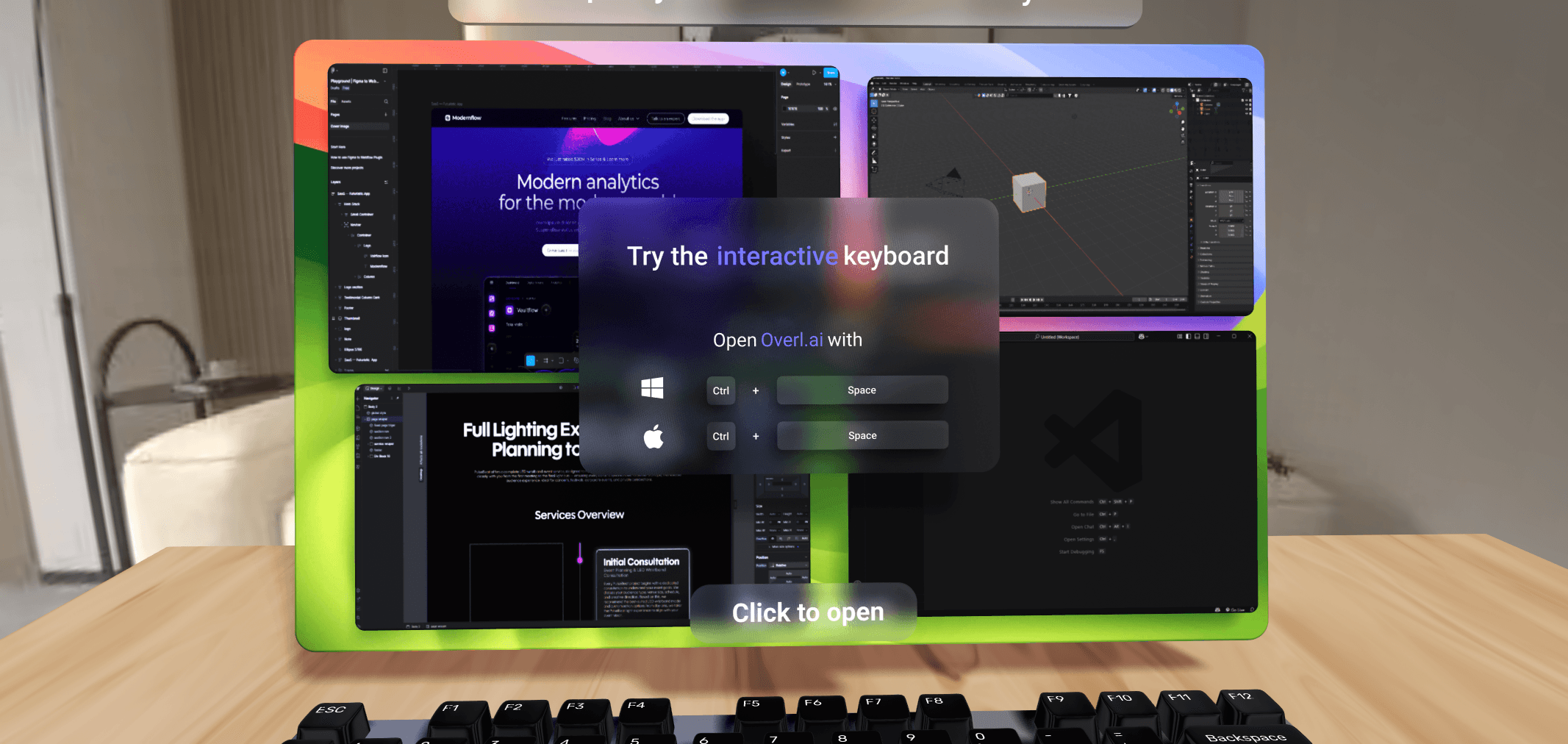
Overl.ai was designed as an interactive 3D experience that replicates the real behavior of the product. Instead of explaining features through static screens, the system allows users to experience the workflow directly. A fully interactive keyboard and UI environment were created, where real key presses trigger actions inside the 3D scene—making the interaction feel immediate, intuitive, and true to the actual product.
Problem
Explaining a Fast, Invisible Workflow Through Traditional Static Interfaces.
The product operates through shortcut-based interactions, appearing instantly without interrupting the user’s workflow. This kind of behavior is difficult to communicate using static visuals or conventional UI showcases. The challenge was to demonstrate speed, accessibility, and real-time functionality in a way users could immediately understand and feel—without relying on long explanations.

Solution
Building a Fully Interactive 3D Environment Connected to Real User Input and Actions.
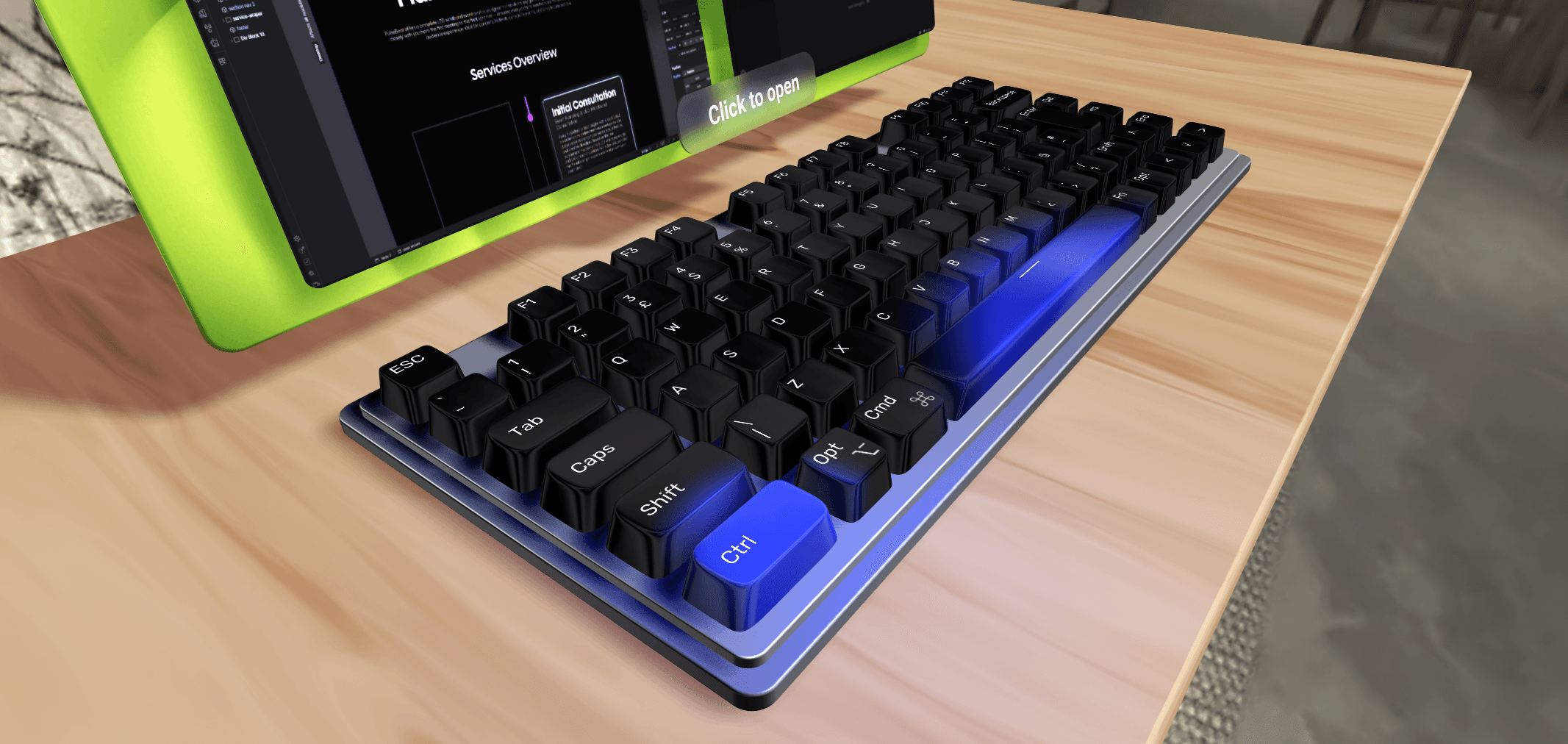
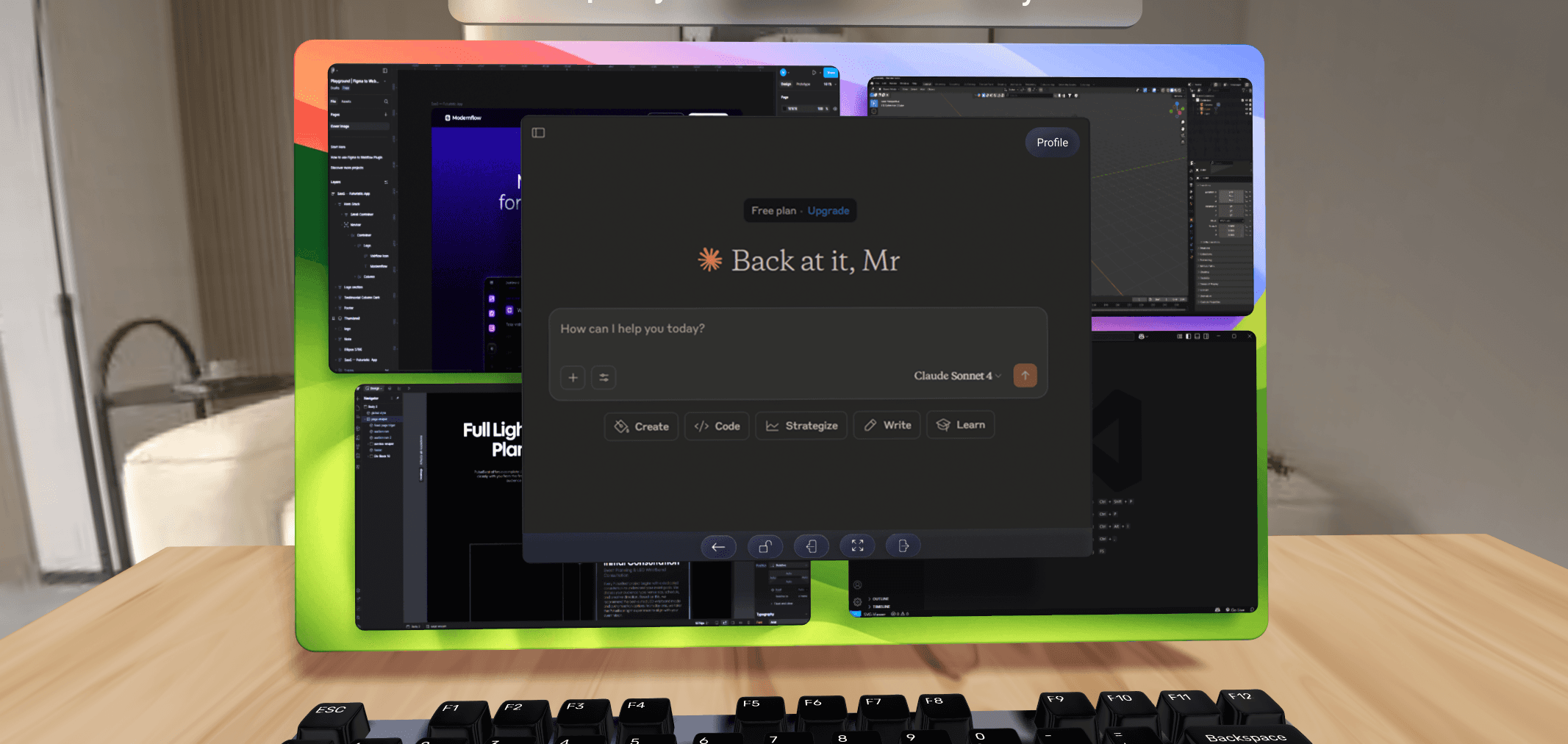
A detailed 3D workspace was created, including a responsive keyboard and multi-window interface. Each key press on the user’s actual keyboard is reflected in real time within the 3D model, creating a direct connection between user input and visual feedback. When shortcut combinations are triggered, the AI interface appears instantly, allowing users to interact with different tools inside the scene. This transforms the experience from passive viewing into active exploration.
Outcome
A Product Experience That Feels Instant, Interactive, and Built Into the Workflow.
The final result is a highly engaging experience that demonstrates the product’s core value—speed and accessibility—through interaction rather than explanation. Users don’t just see how the system works; they experience it in real time. By combining 3D, motion, and live input responsiveness, the project creates a seamless bridge between concept and functionality.
More Works
(GQ® — 02)
©2024


2025
Overl.ai
An immersive interactive 3D experience designed to demonstrate a real-time AI workflow system—bringing speed, control, and accessibility directly into the user’s environment.
Spline
Interactive 3D
Interactive Experience
Designing a Real-Time Interactive System That Mirrors How the Product Actually Works.
From static visuals to functional experience
Overl.ai was designed as an interactive 3D experience that replicates the real behavior of the product. Instead of explaining features through static screens, the system allows users to experience the workflow directly. A fully interactive keyboard and UI environment were created, where real key presses trigger actions inside the 3D scene—making the interaction feel immediate, intuitive, and true to the actual product.
Problem
Explaining a Fast, Invisible Workflow Through Traditional Static Interfaces.
The product operates through shortcut-based interactions, appearing instantly without interrupting the user’s workflow. This kind of behavior is difficult to communicate using static visuals or conventional UI showcases. The challenge was to demonstrate speed, accessibility, and real-time functionality in a way users could immediately understand and feel—without relying on long explanations.
Solution
Building a Fully Interactive 3D Environment Connected to Real User Input and Actions.
A detailed 3D workspace was created, including a responsive keyboard and multi-window interface. Each key press on the user’s actual keyboard is reflected in real time within the 3D model, creating a direct connection between user input and visual feedback. When shortcut combinations are triggered, the AI interface appears instantly, allowing users to interact with different tools inside the scene. This transforms the experience from passive viewing into active exploration.
Outcome
A Product Experience That Feels Instant, Interactive, and Built Into the Workflow.
The final result is a highly engaging experience that demonstrates the product’s core value—speed and accessibility—through interaction rather than explanation. Users don’t just see how the system works; they experience it in real time. By combining 3D, motion, and live input responsiveness, the project creates a seamless bridge between concept and functionality.
More Works
(GQ® — 02)
©2024
2025
Overl.ai
An immersive interactive 3D experience designed to demonstrate a real-time AI workflow system—bringing speed, control, and accessibility directly into the user’s environment.
Spline
Interactive 3D
Interactive Experience
Designing a Real-Time Interactive System That Mirrors How the Product Actually Works.
From static visuals to functional experience
Overl.ai was designed as an interactive 3D experience that replicates the real behavior of the product. Instead of explaining features through static screens, the system allows users to experience the workflow directly. A fully interactive keyboard and UI environment were created, where real key presses trigger actions inside the 3D scene—making the interaction feel immediate, intuitive, and true to the actual product.
Problem
Explaining a Fast, Invisible Workflow Through Traditional Static Interfaces.
The product operates through shortcut-based interactions, appearing instantly without interrupting the user’s workflow. This kind of behavior is difficult to communicate using static visuals or conventional UI showcases. The challenge was to demonstrate speed, accessibility, and real-time functionality in a way users could immediately understand and feel—without relying on long explanations.
Solution
Building a Fully Interactive 3D Environment Connected to Real User Input and Actions.
A detailed 3D workspace was created, including a responsive keyboard and multi-window interface. Each key press on the user’s actual keyboard is reflected in real time within the 3D model, creating a direct connection between user input and visual feedback. When shortcut combinations are triggered, the AI interface appears instantly, allowing users to interact with different tools inside the scene. This transforms the experience from passive viewing into active exploration.
Outcome
A Product Experience That Feels Instant, Interactive, and Built Into the Workflow.
The final result is a highly engaging experience that demonstrates the product’s core value—speed and accessibility—through interaction rather than explanation. Users don’t just see how the system works; they experience it in real time. By combining 3D, motion, and live input responsiveness, the project creates a seamless bridge between concept and functionality.
More Works
©2024